


Page 134 - 《橡塑技术与装备》2026年2期
P. 134
橡塑技术与装备
            HINA R&P  TECHNOLOGY  AND EQUIPMENT


                                                               速移至冰水中。冷热交替引起的温差及材料热膨胀系
                                                               数差异将产生显著应力。若粘合不良,两种材料将发
                                                               生分离。该方法操作简便、结果直观,适用于快速筛
                                                               选与验证。


                                                               6 结语
                                                                   硅橡胶凭借其优异的综合性能,已成为多个高端
                                                               领域的关键材料。通过合理的表面处理与粘接技术,
                                                               可实现其与金属、塑料等多种材料的稳定结合。未来,
                                                               随着环保型表面处理技术与高效粘接方法的不断发
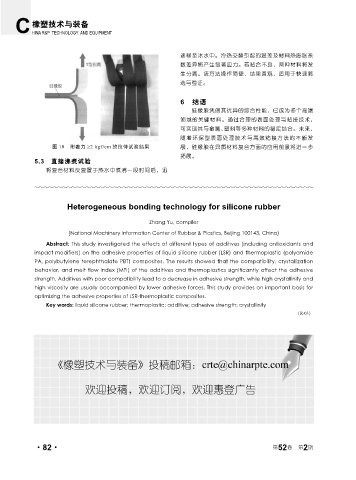
                   图 10 附着力 ≥2 kgf/cm 的拉伸试验结果                  展,硅橡胶在异质材料复合方面的应用前景将进一步
                                                               拓展。
             5.3 直接沸煮试验
                 将复合材料反复置于热水中煮沸一段时间后,迅


                        Heterogeneous bonding technology for silicone rubber


                                                    Zhang Yu, compiler
                         (National Machinery Information Center of Rubber & Plastics, Beijing 100143, China)

                 Abstract: This study investigated the effects of different types of additives (including antioxidants and
             impact modifiers) on the adhesive properties of liquid silicone rubber (LSR) and thermoplastic (polyamide
             PA, polybutylene terephthalate PBT) composites. The results showed that the compatibility, crystallization
             behavior, and melt flow index (MFI) of the additives and thermoplastics significantly affect the adhesive
             strength. Additives with poor compatibility lead to a decrease in adhesive strength, while high crystallinity and
             high viscosity are usually accompanied by lower adhesive forces. This study provides an important basis for
             optimizing the adhesive properties of LSR-thermoplastic composites.
                 Key words: liquid silicone rubber; thermoplastic; additive; adhesive strength; crystallinity
                                                                                                       (R-03)


                                                                                                         2
             ·82·                                                                              第 52 卷  第 期

